The Joy of Being The Cause
Installation View, 2022
The Joy of Being The Cause
Installation View, 2022
The Joy of Being The Cause
Installation View, 2022
The Joy of Being The Cause
Installation View, 2022
The Joy of Being The Cause
Installation View, 2022
The Joy of Being The Cause
Installation View, 2022
The Joy of Being The Cause, Arthur Boskamp Foundation
Scroll Down for German
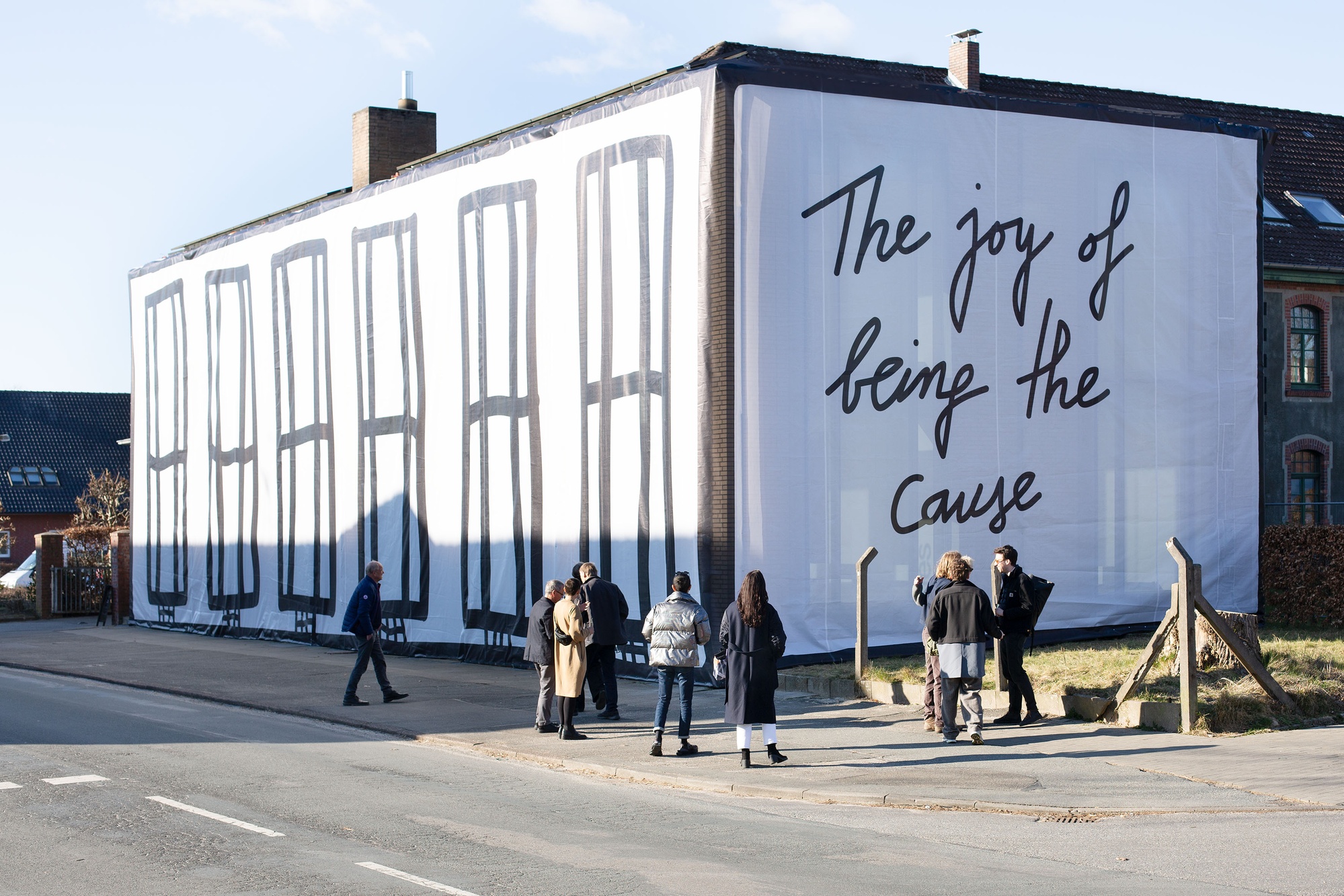
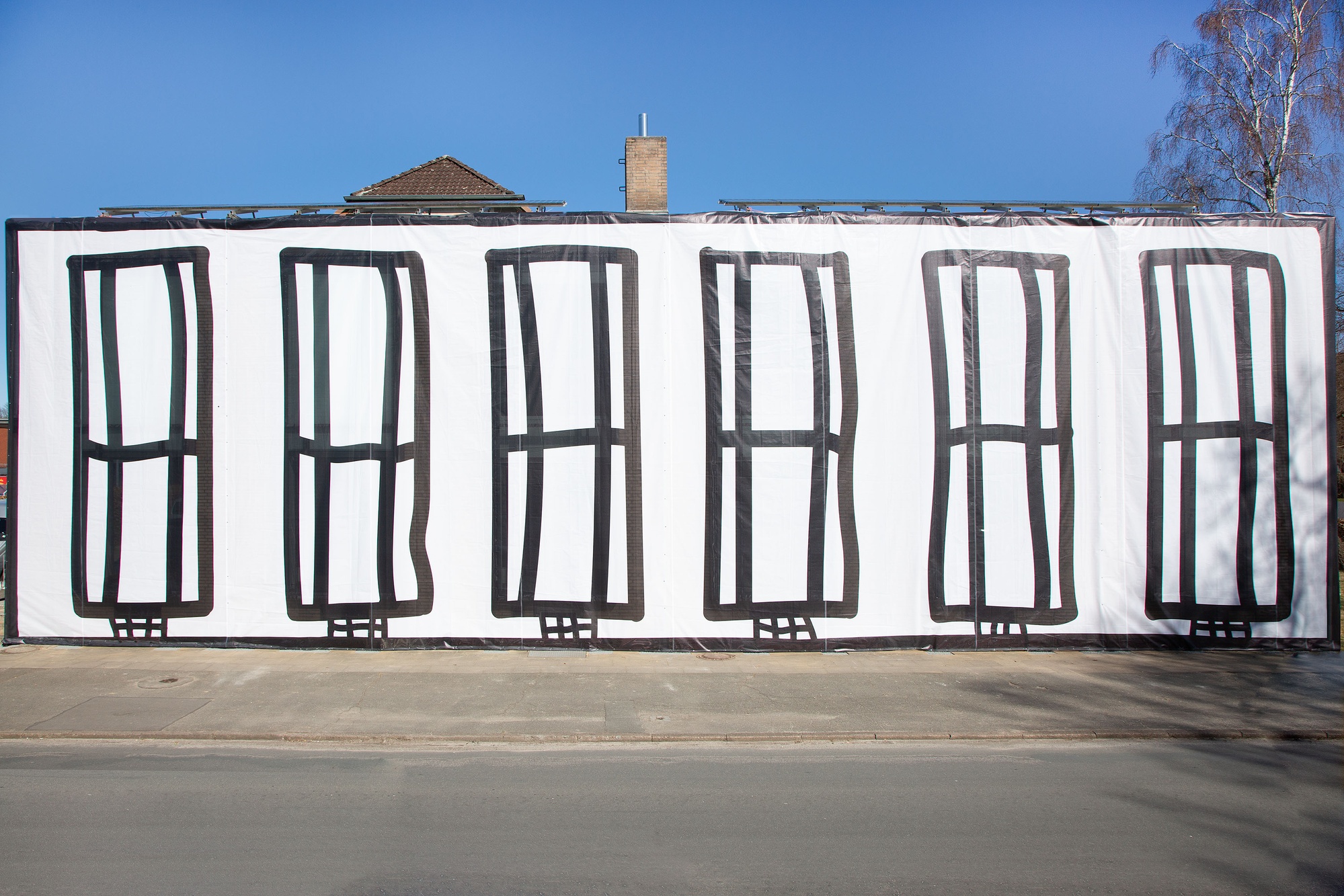
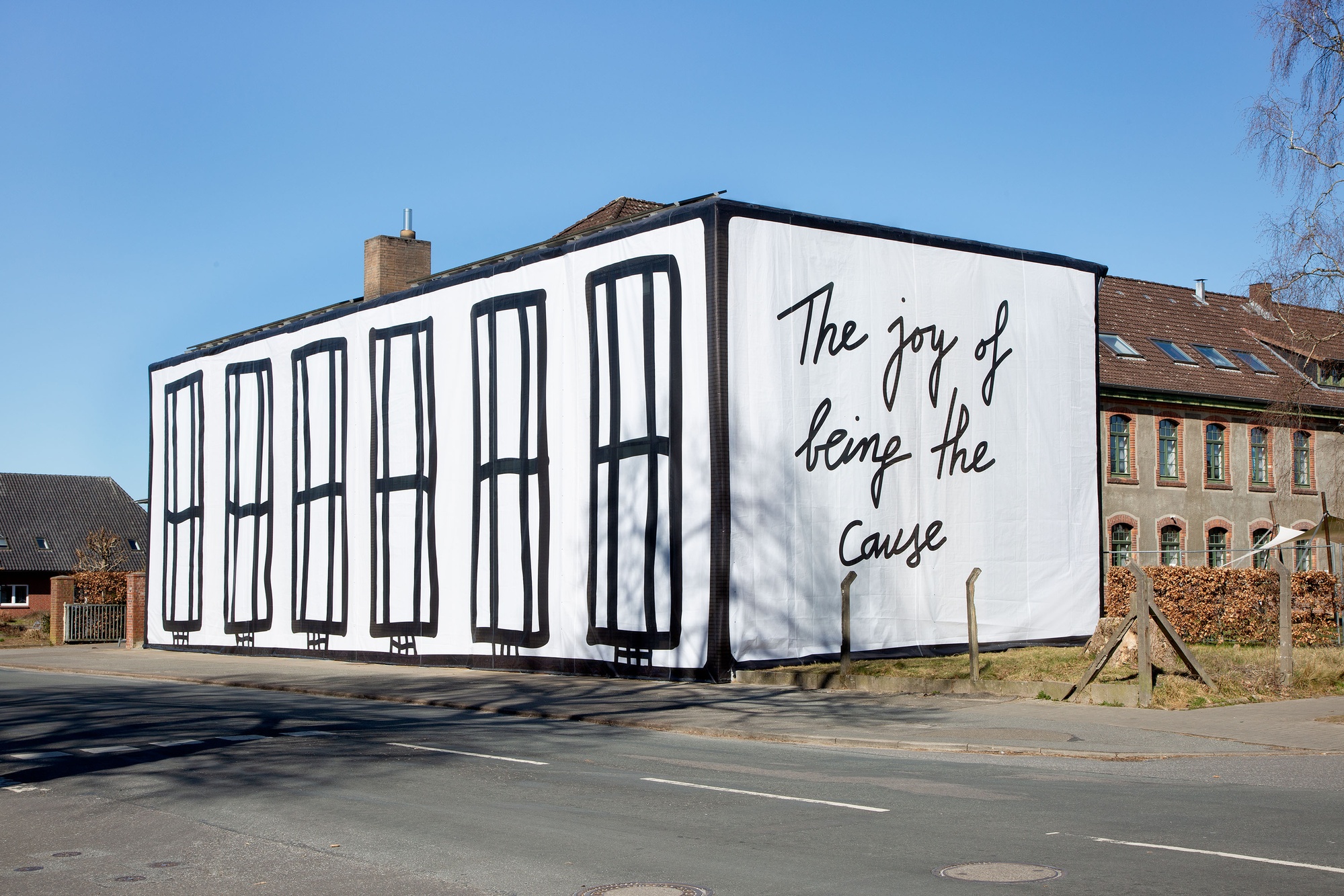
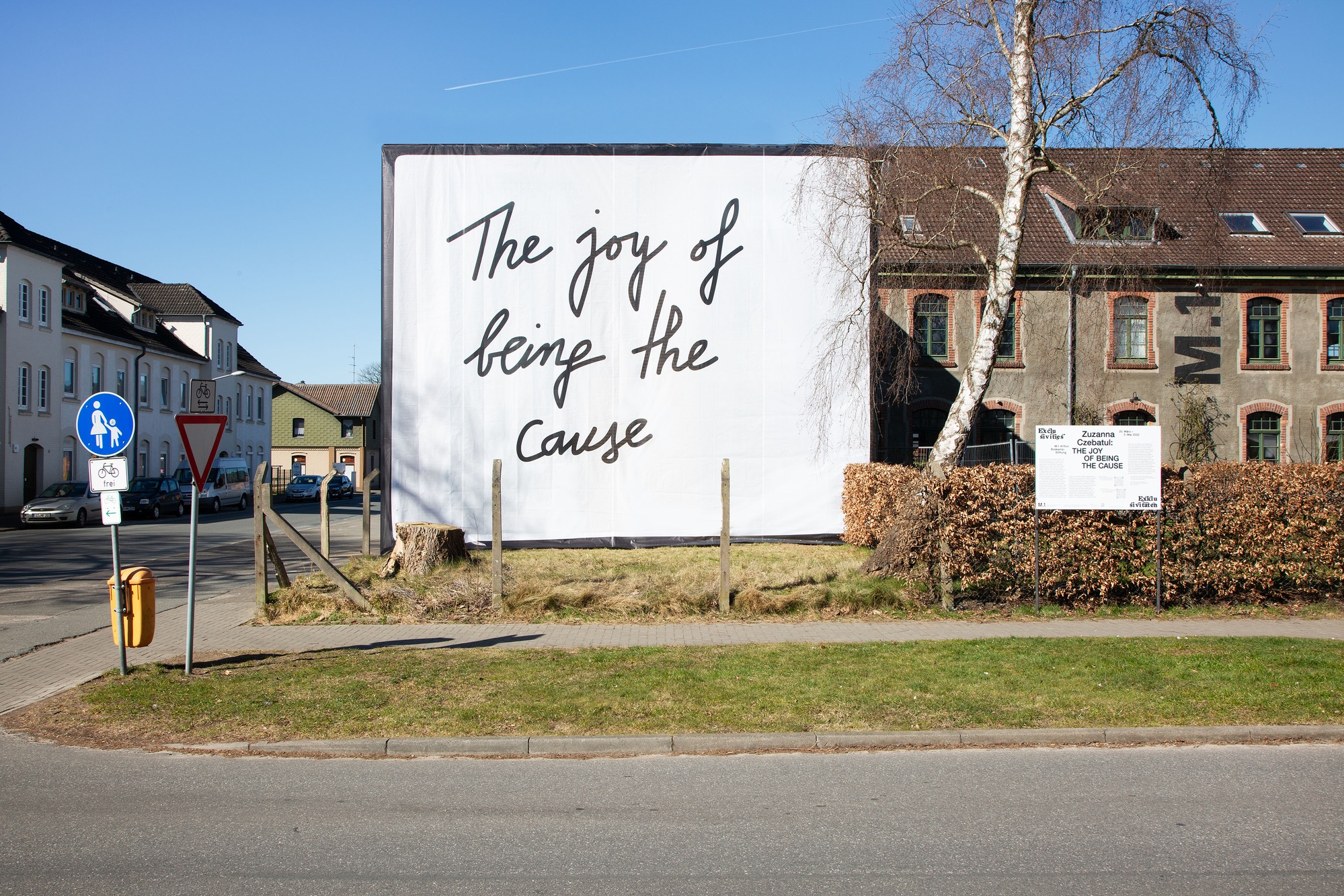
Zuzanna Czebatul covers the M.1 with a scaffolding tarp. The building is closed off to the outside, while the exhibition opens up into the public space and is always accessible; thus asking what happens to art when it is no longer perceived in frames and on plinths, but as an everyday-looking reconstruction phase. So if Czebatul’s work suggests placing the institution in a state of transition by covering the building, what does this change imply?
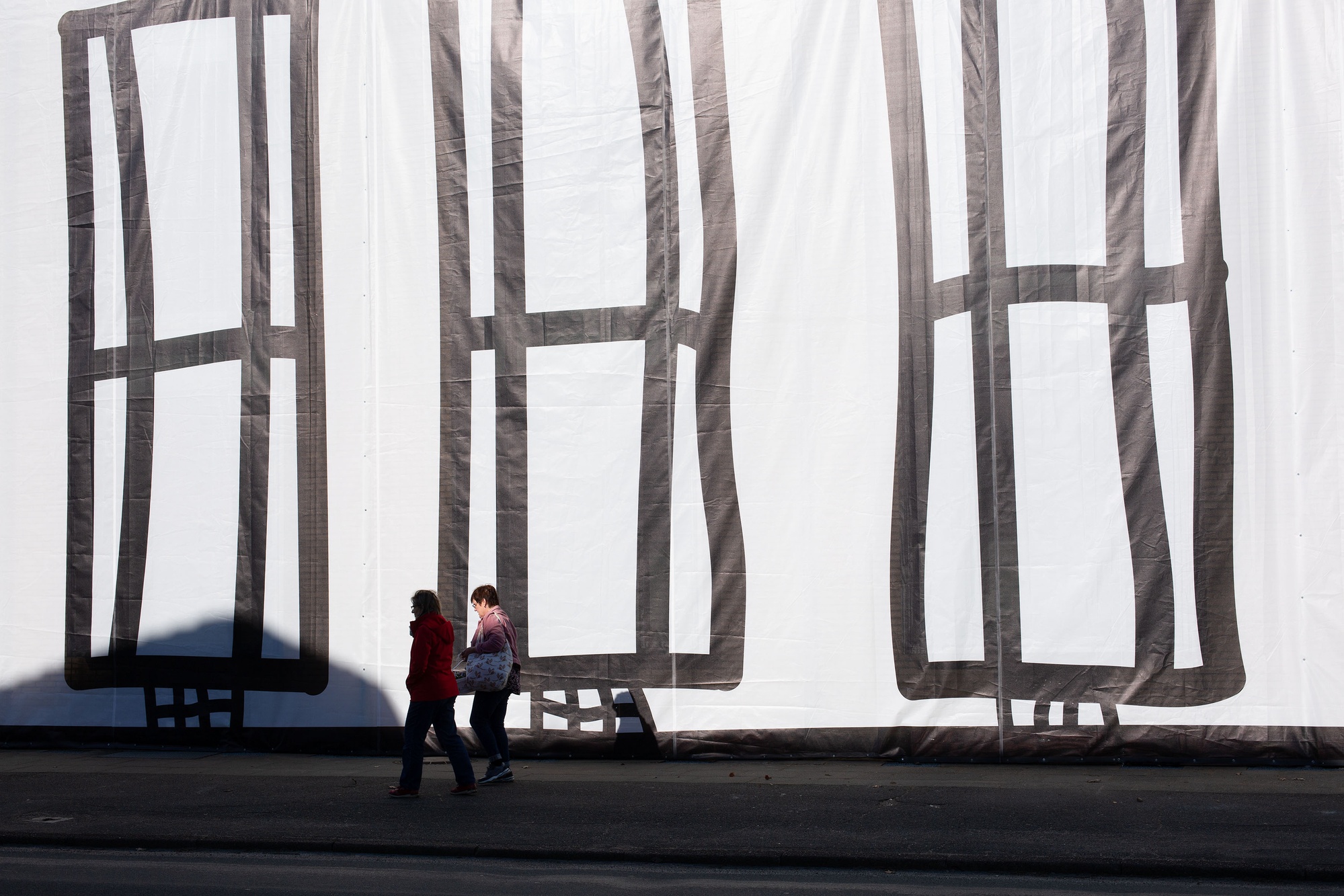
THE JOY OF BEING THE CAUSE initially breaks with an apparent transparency: No one can look directly into the foundation’s exhibition space any more. At the same time, this insight is covered by what is already underneath: The outlines of the house are repeated on the tarpaulin. This almost comic-like tracing raises the building to a fictional, narrative level. Only who is telling whose story – and for whom?
By obscuring the building, THE JOY OF BEING THE CAUSE points to an institutional agenda that is always up for debate; to the future goals pursued by art institutions as well as to their original rationale and condition for pursuing a public mission. Between these poles, the work stretches out like a net that denies insights and at the same time makes new views possible. Private art institutions are involved in political and social processes from which a public interest emanates. Czebatul’s work thus shows what makes institutional exhibition spaces exclusive: the personal signature of individuals in relation to the participation possibilities of many. In this sense, the M.1 is not only wrapped up, but entangled in the relationships it represents. The architecture becomes a canvas – but who or what does it actually represent?
German
Zuzanna Czebatul verhüllt das M.1 mit einer Gerüstplane. Das Gebäude wird nach außen hin abgeschottet, während sich die Ausstellung in den öffentlichen Raum öffnet und jederzeit zugänglich ist. So stellt sich die Frage, was mit Kunst geschieht, wenn sie nicht mehr in Rahmen oder auf Sockeln wahrgenommen wird, sondern wie eine alltägliche Umbauphase erscheint. Wenn Czebatuls Arbeit also vorschlägt, die Institution durch das Verhüllen des Gebäudes in einen Zustand des Übergangs zu versetzen – was bedeutet diese Veränderung?
THE JOY OF BEING THE CAUSE bricht zunächst mit einer scheinbaren Transparenz: Niemand kann mehr direkt in den Ausstellungsraum der Stiftung blicken. Gleichzeitig wird dieser Einblick von dem überlagert, was ohnehin darunter liegt: Die Umrisse des Hauses wiederholen sich auf der Plane. Diese fast comicartige Nachzeichnung hebt das Gebäude auf eine fiktionale, narrative Ebene. Doch wer erzählt hier wessen Geschichte – und für wen?
Indem das Gebäude verdeckt wird, verweist THE JOY OF BEING THE CAUSE auf eine institutionelle Agenda, die stets zur Diskussion steht – auf die zukünftigen Ziele von Kunstinstitutionen ebenso wie auf ihre ursprüngliche Begründung und die Voraussetzungen ihres öffentlichen Auftrags. Zwischen diesen Polen spannt sich die Arbeit wie ein Netz, das Einblicke verweigert und zugleich neue Perspektiven ermöglicht. Private Kunstinstitutionen sind in politische und gesellschaftliche Prozesse eingebunden, aus denen ein öffentliches Interesse hervorgeht. Czebatuls Arbeit zeigt damit, was institutionelle Ausstellungsräume exklusiv macht: die persönliche Handschrift Einzelner im Verhältnis zu den Beteiligungsmöglichkeiten vieler. In diesem Sinne ist das M.1 nicht nur eingehüllt, sondern in die Beziehungen verstrickt, die es repräsentiert. Die Architektur wird zur Leinwand – doch wen oder was stellt sie eigentlich dar?
Photo: Jens Franke